Solo Exhibition, Whitestone Gallery, June 5 – June 27, 2026 / 個展、銀座ホワイトストーンギャラリー、2026年6月5日〜6月27日
-Threshold Series-
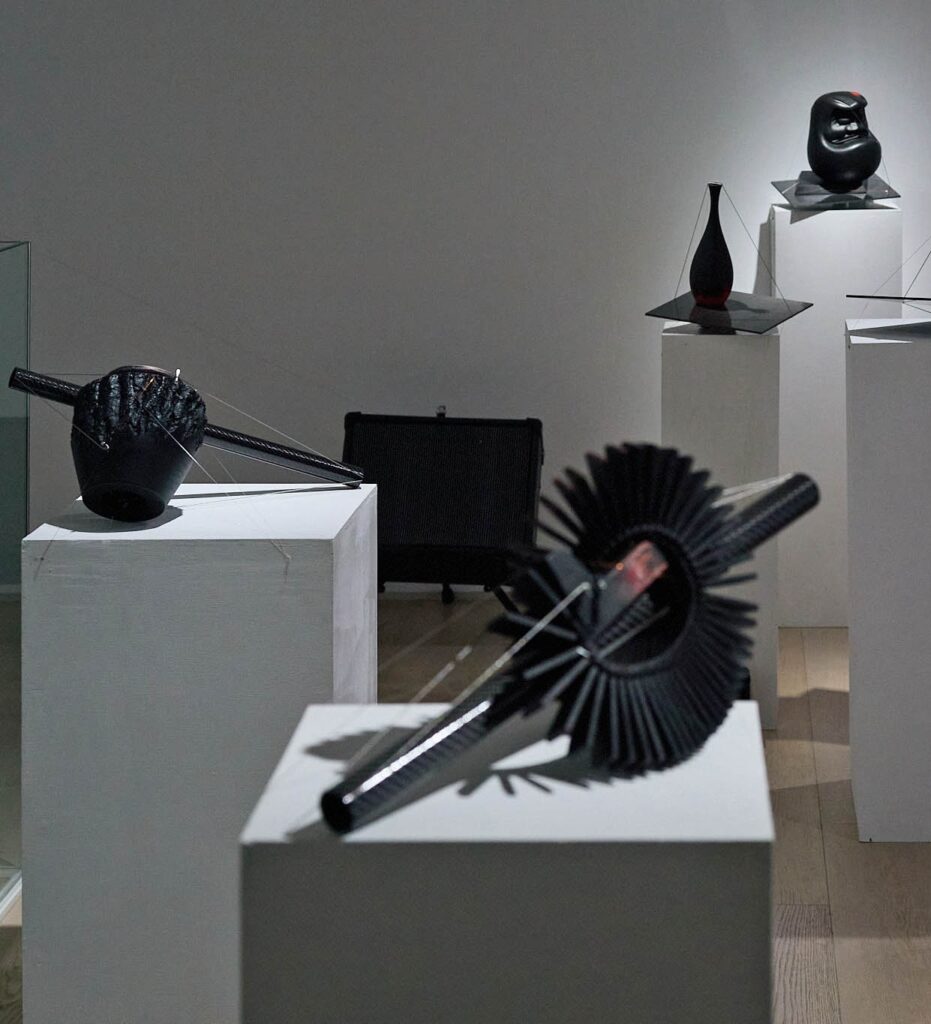
Installation views, 2floor / 展示風景(2階)
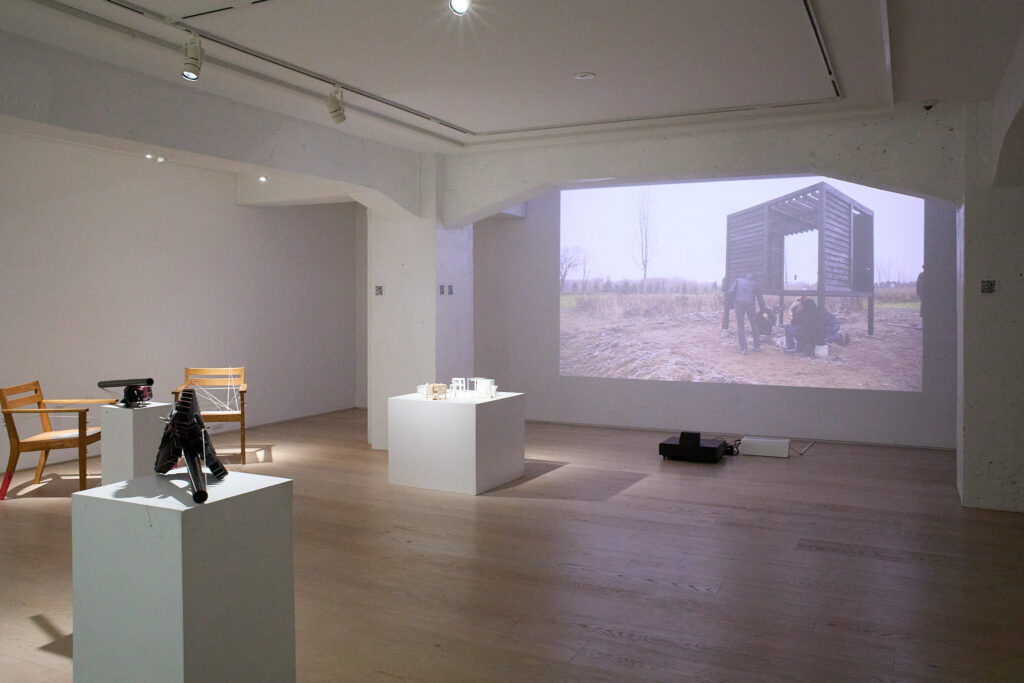
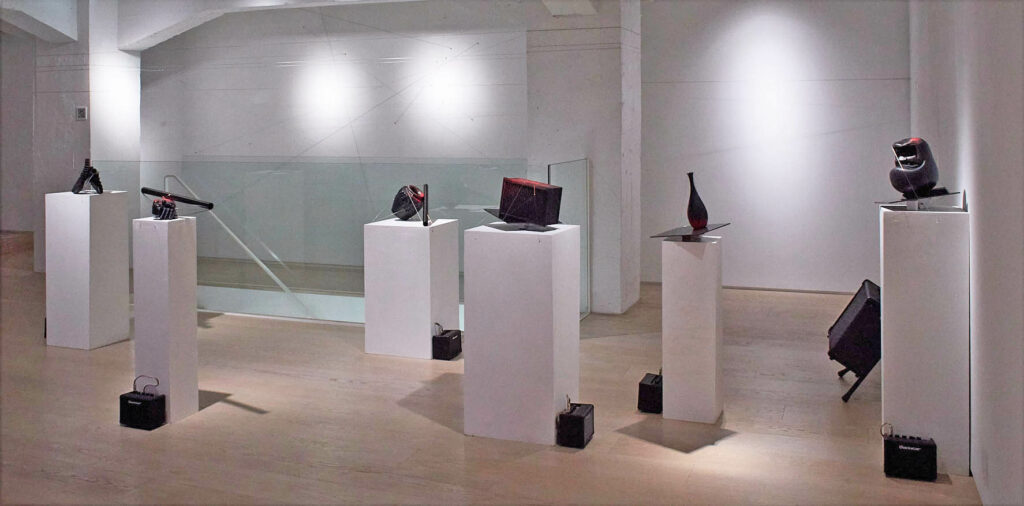
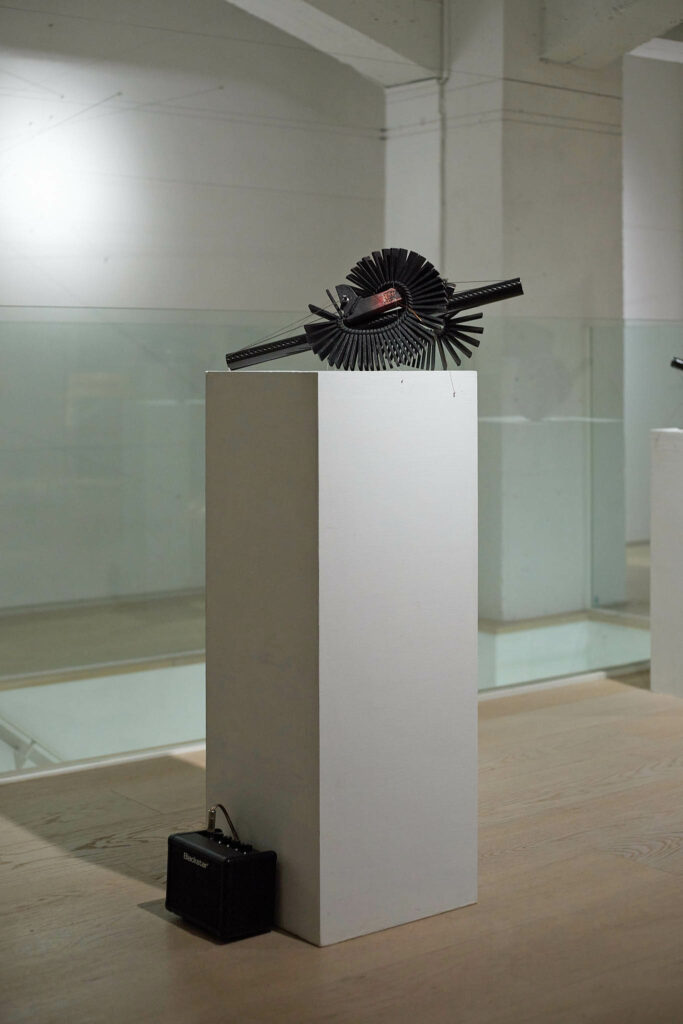
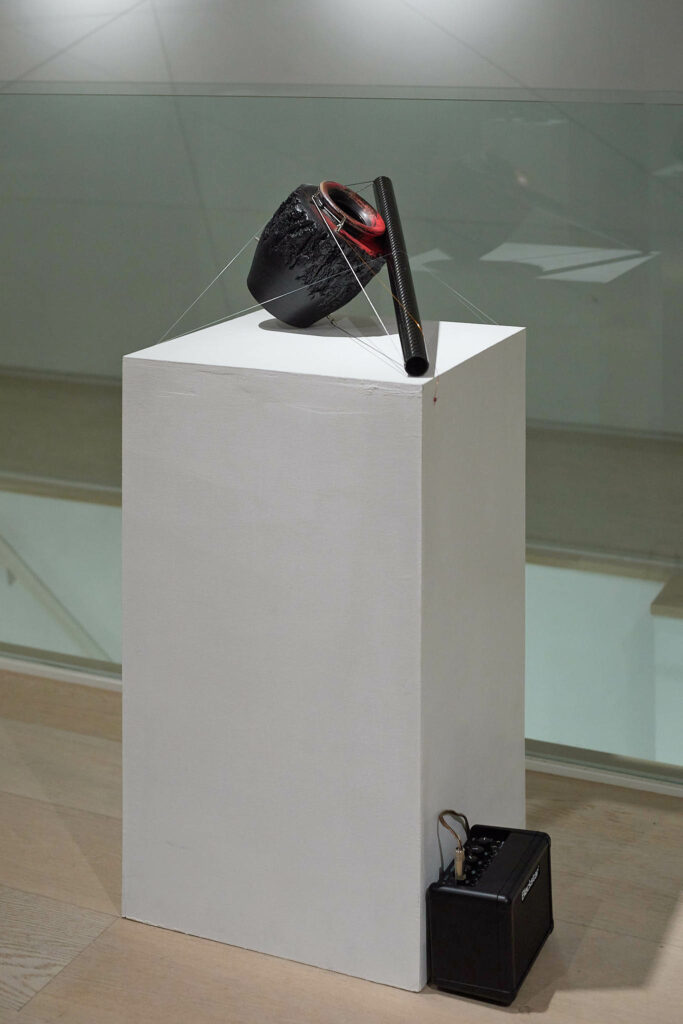
VIDEO: How to Play the Sculpture-Instruments “Threshold 1-6” (Demonstrated by a visiting dancer)
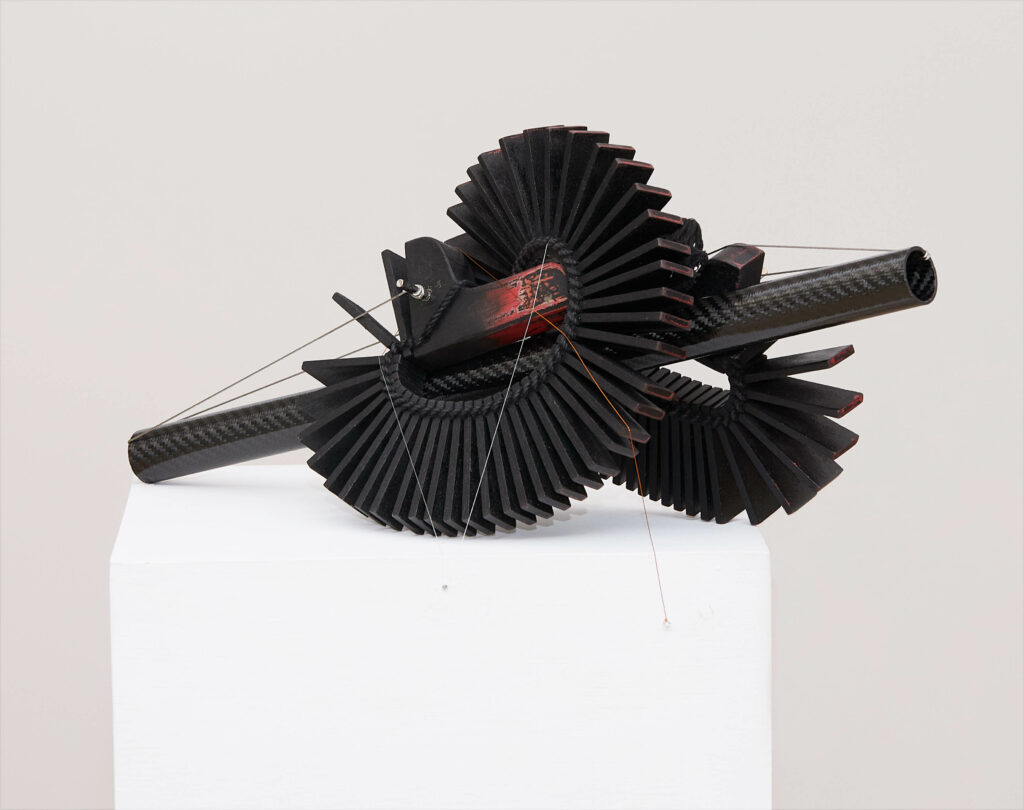
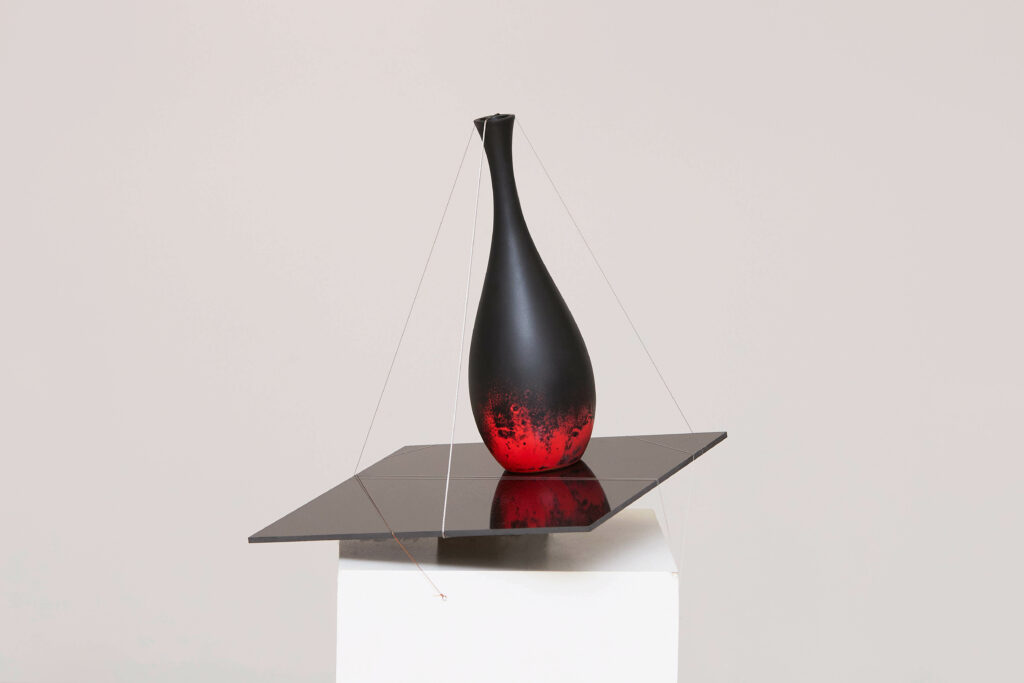
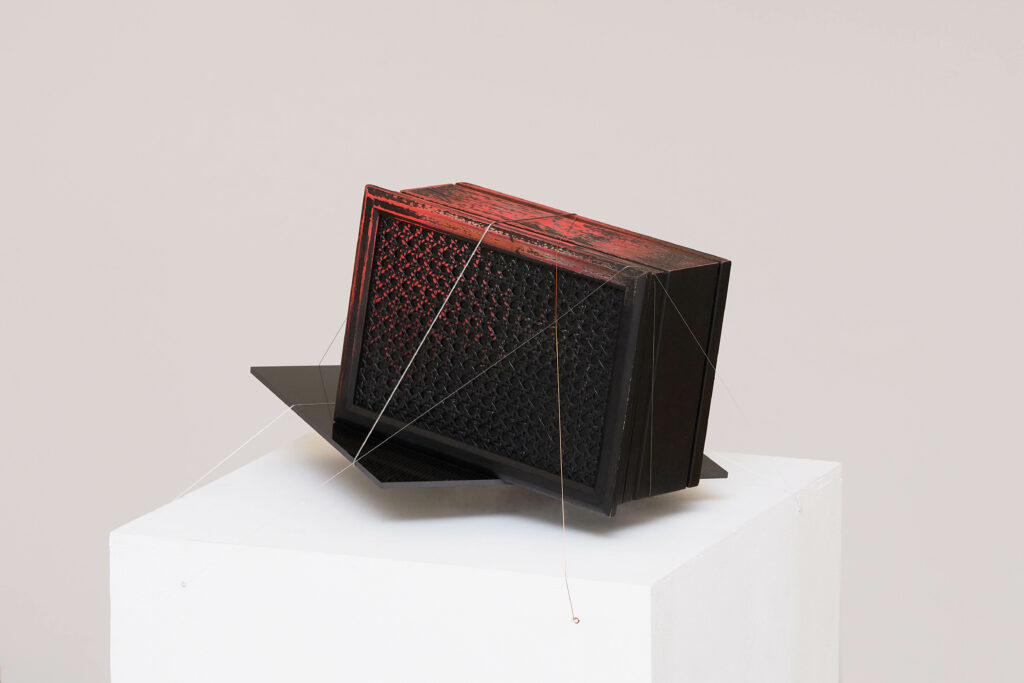
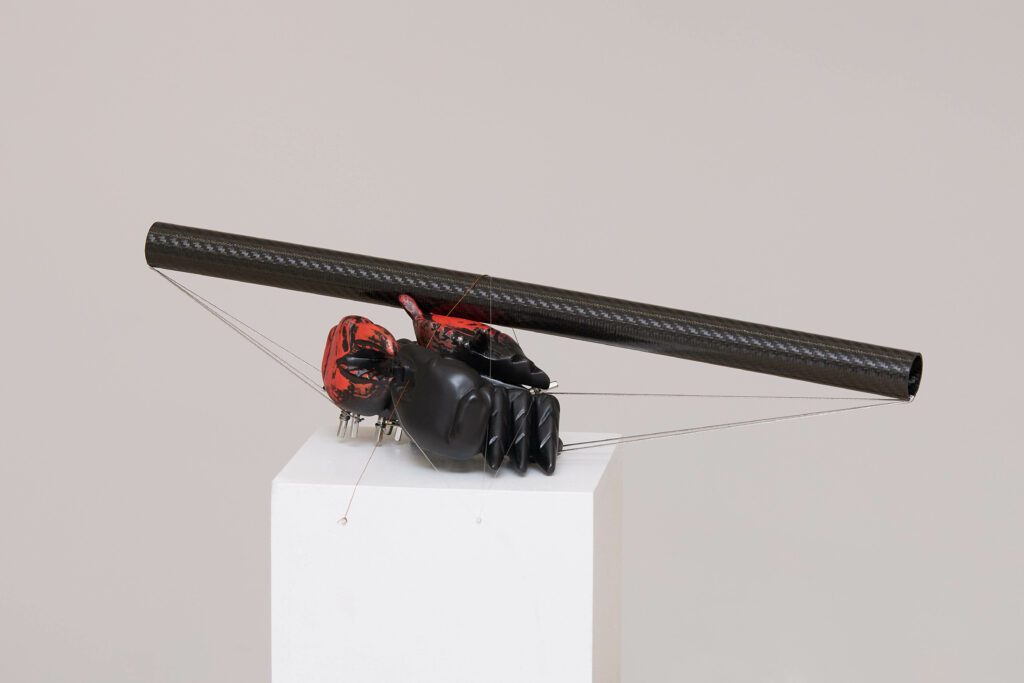
Threshold 1, 2026 (Top, Left)
21.0 × 41.0 × 40.0 cm (8.3 x 16.1 × 15.7 in)
Japanese sasara, acrylic, stainless steel wire, carbon tube, copper wire, tuning pins
Threshold 5, 2026 (Top, Right)
29.0 × 33.0 x 31.0 cm (11.4 × 13.0 × 12.2 in)
Japanese vase, acrylic, stainless steel wire, carbon tube, copper wire, tuning pins
Threshold 6, 2026 (Bottom, Left)
21.3 × 34.0 x 28.0 cm (8.4 × 13.4 x 11.0 in)
Music Box, acrylic, stainless steel wire, carbon tube, copper wire, tuning pins
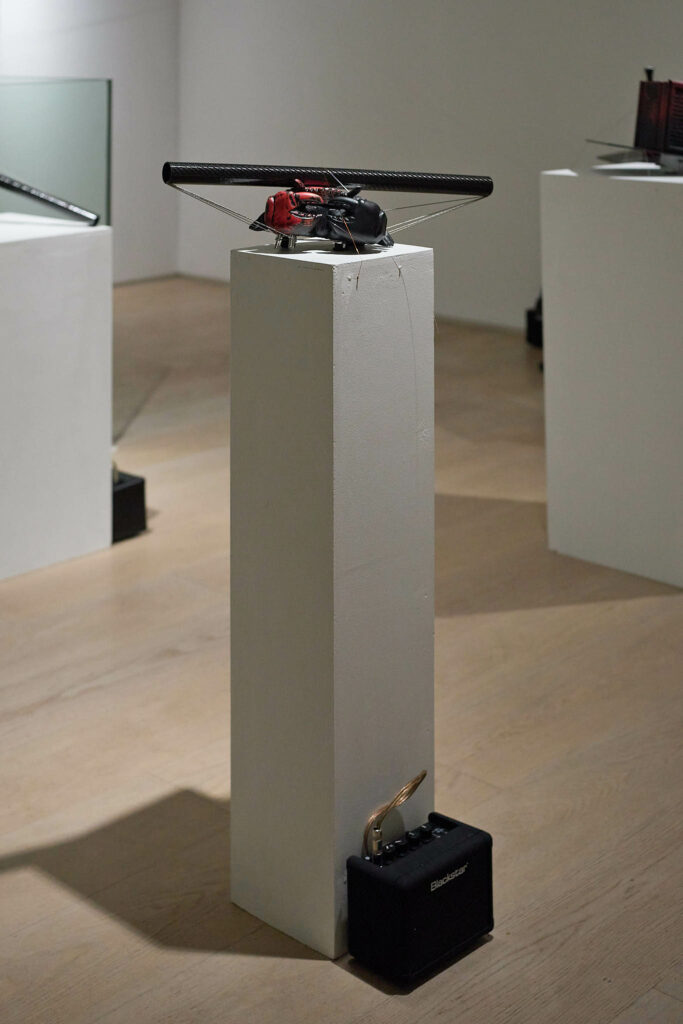
Threshold 3, 2026 (Bottom, Right)
13.0 × 39.0 x 38.5 cm (5.1 x 15.4 × 15.2 in)
Crab Box, acrylic, stainless steel wire, carbon tube, copper wire, tuning pins
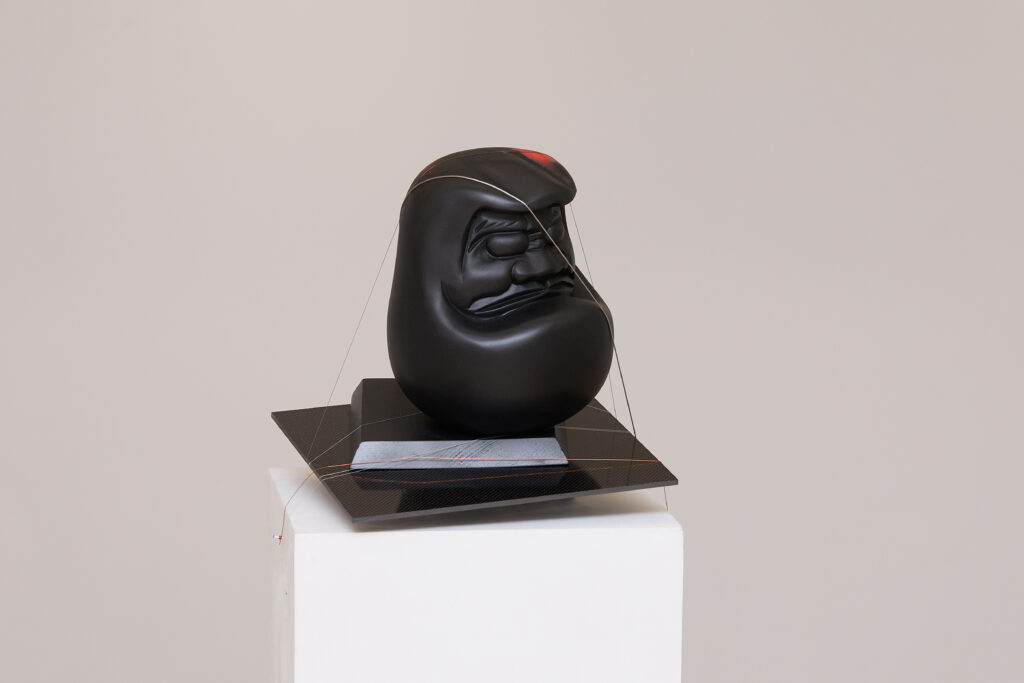
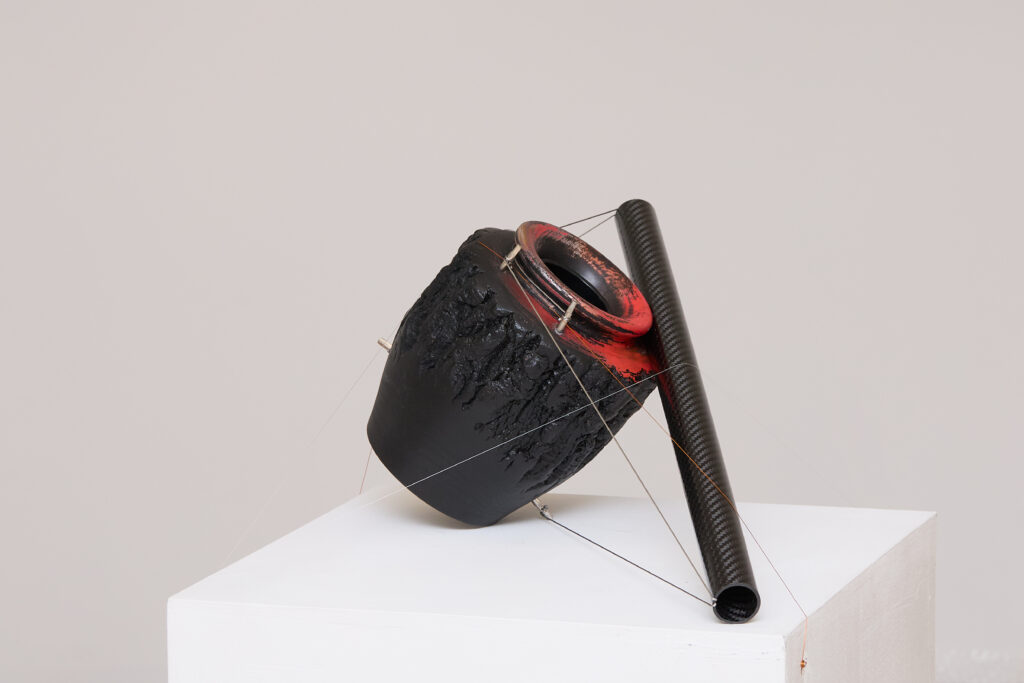
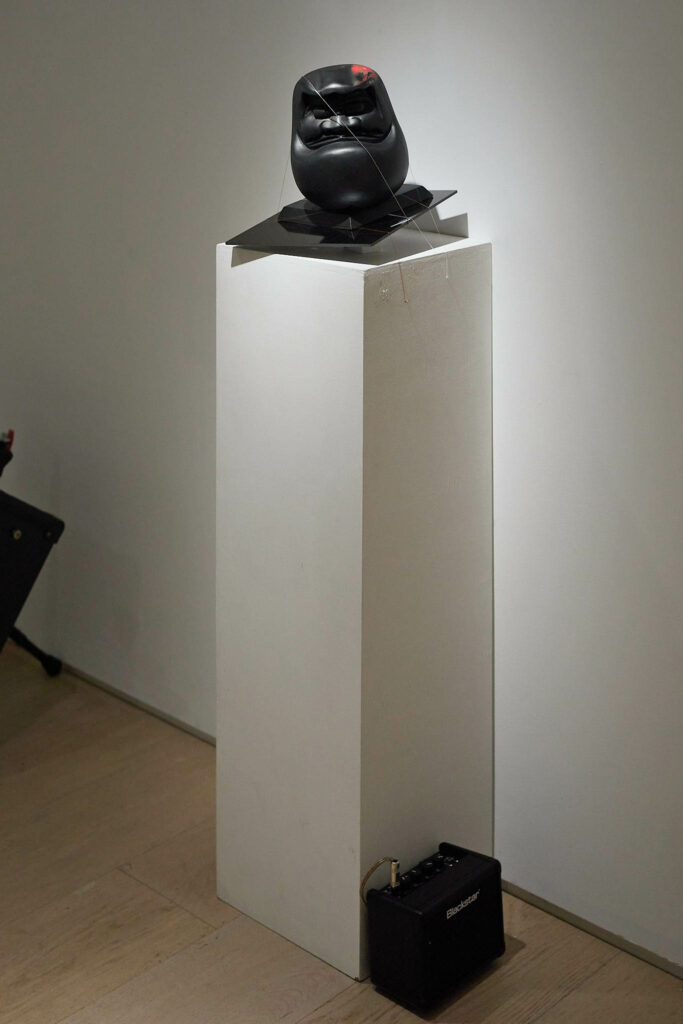
Threshold 4, 2026 (Left)
26.5 × 27.0 × 27.0 cm (10.4 × 10.6 × 10.6 in)
Japanese daruma, acrylic, stainless steel wire, carbon tube, copper wire, tuning pins
Threshold 2, 2026 (Right)
20.5 × 37.0 × 40.0 cm (8.1 x 14.6 × 15.7 in)
Japanese pot, acrylic, stainless steel wire, carbon tube, copper wire, tuning pins
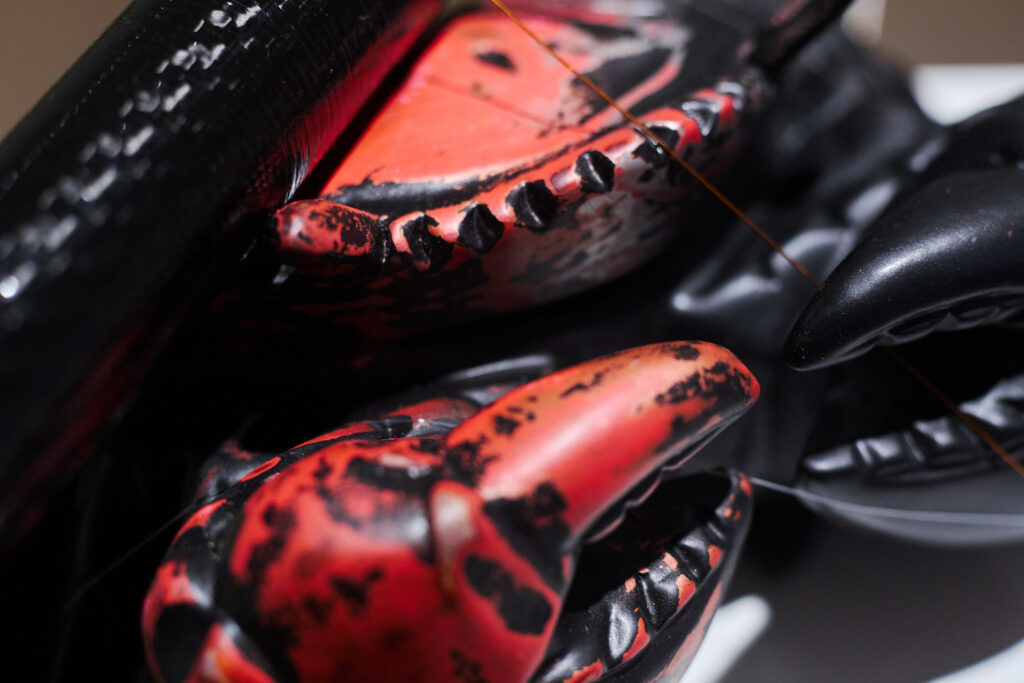
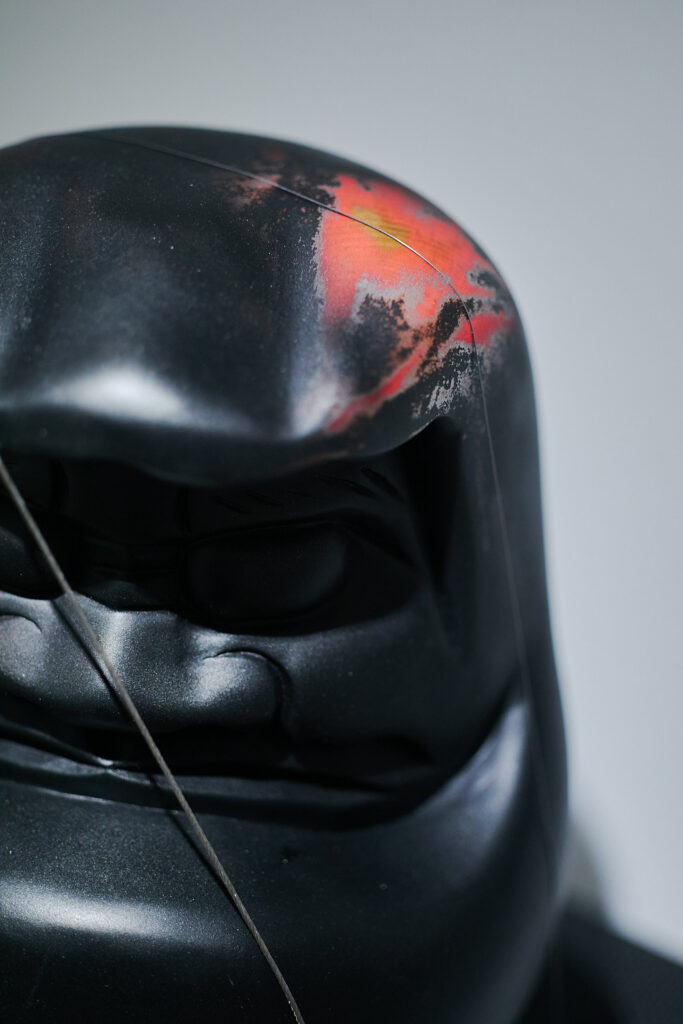
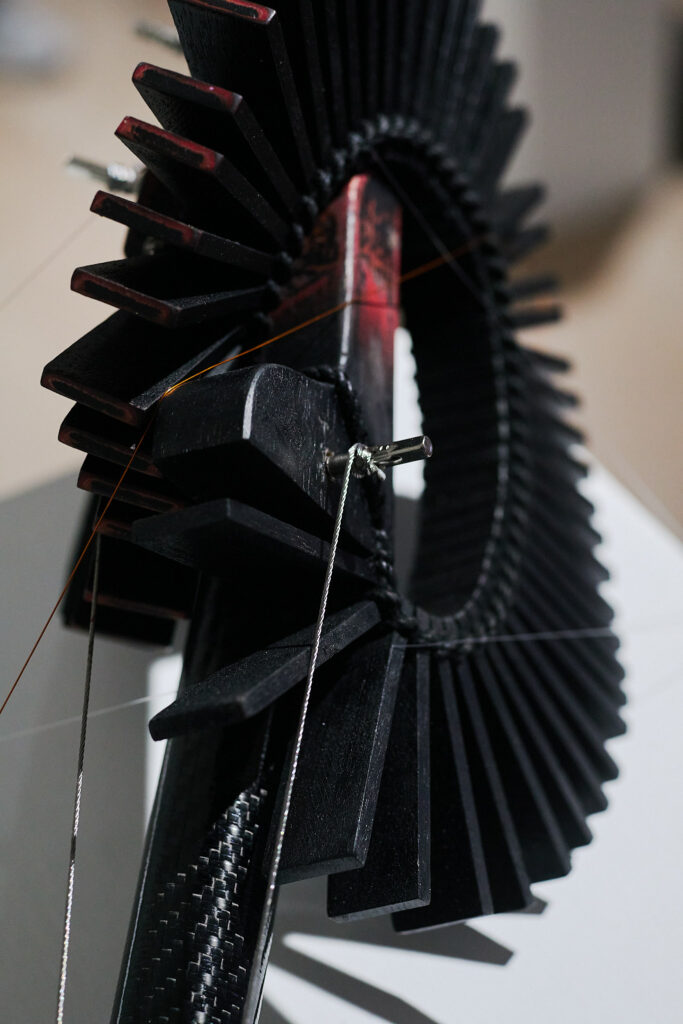
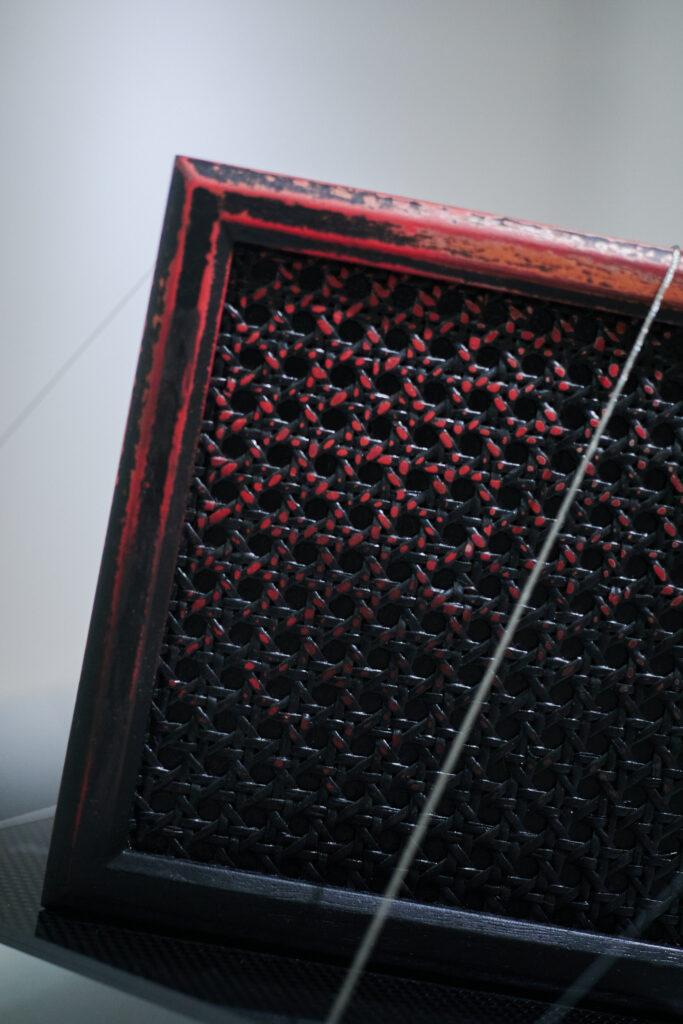
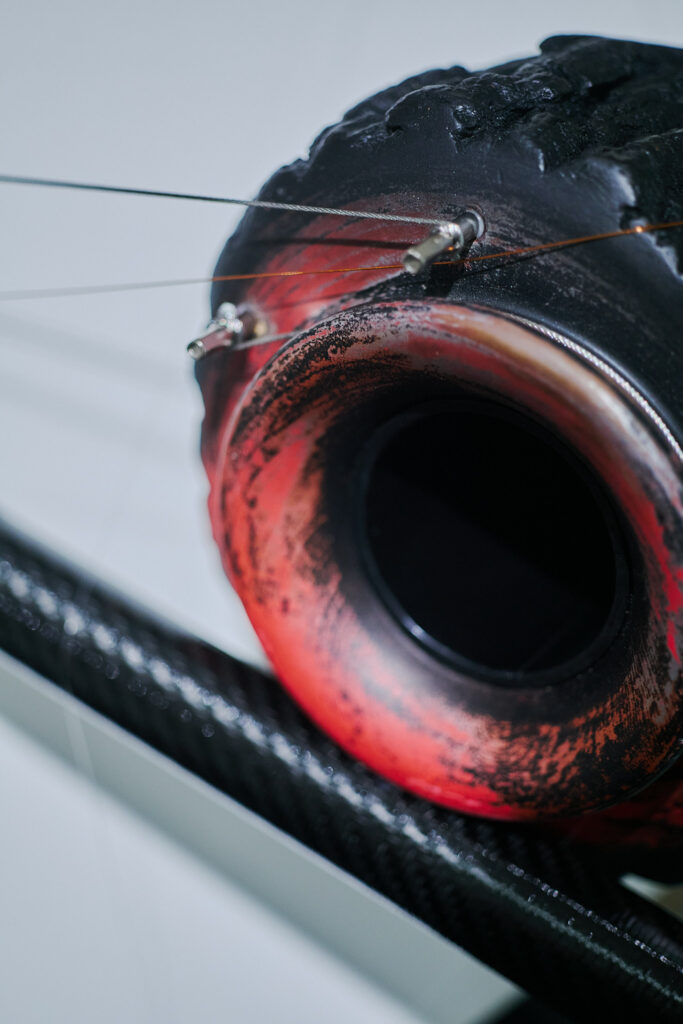
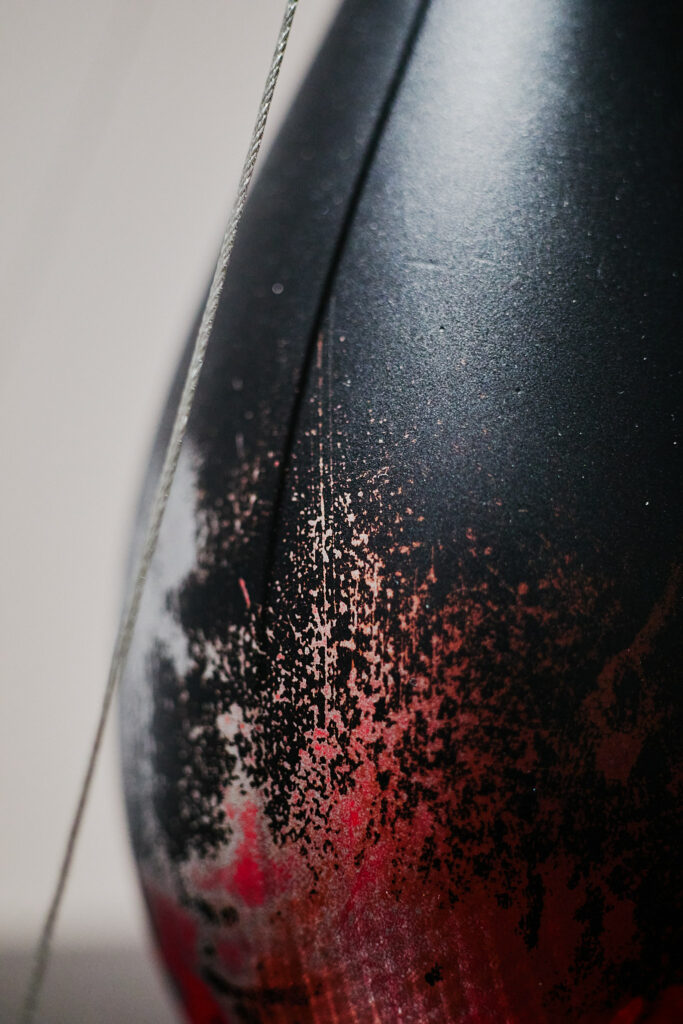
Between sound and silence. An inquiry into the threshold of perception
Overall Concept
Through my cochlear implant, I live between a world of sound and a world of silence. My work explores the threshold between these two modes of perception across different media—painting, sculpture, and installation. This is not a story of recovery, of regaining lost sound. Rather, it is an attempt to bring into the viewer’s own body the experience of two distinct perceptual worlds existing side by side, in the same place.
Threshold
Threshold series is a participatory installation that explores the boundary between auditory and visual space. It serves as a site for introspective dialogue and the awakening of sonic perception, focusing on the individual’s inner world and constituting a space that encourages new perceptual possibilities and reflection.
This space provides an interactive experience of communication, creating an experimental environment in which the artist, viewer, and fellow audience members explore new sensory possibilities while crossing cultural and physical boundaries. Sound is inherently ambiguous; it is a phenomenon that becomes recognizable only because we assign meaning to it. Participating in this space evokes the fundamental question: what are sound and silence?
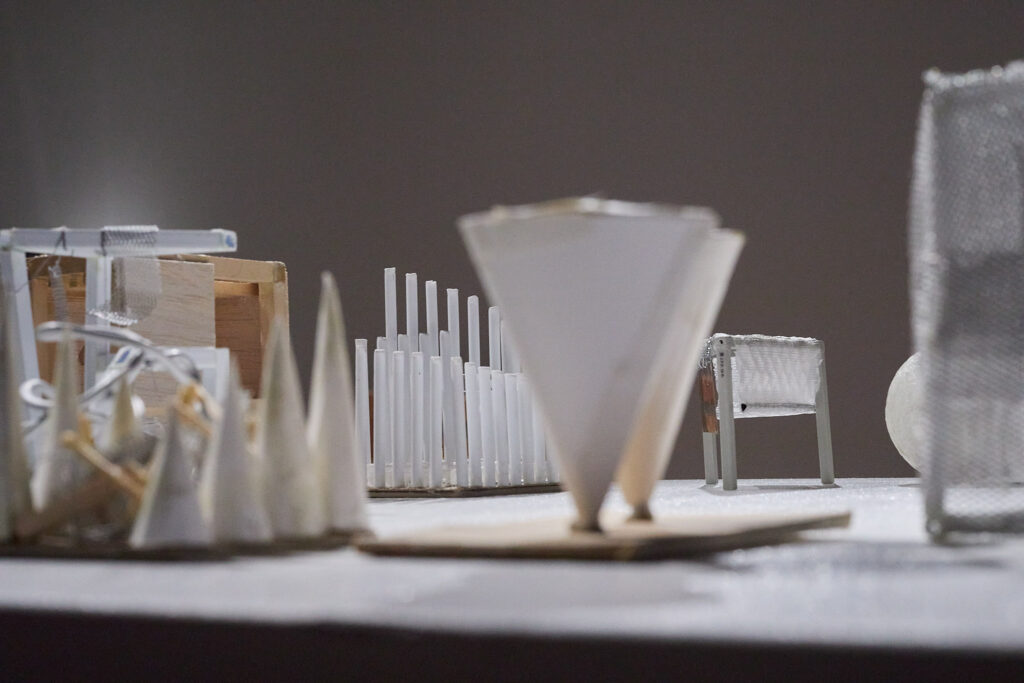
Upon entering the space, the first things one encounters are sculpture-instruments fashioned from transformed everyday objects and thin lines of wire running across the walls. Viewers do not merely “look”; they touch the sculpture-instruments and wall instruments and produce sound. In the quiet space, they pluck strings with their own hands, strike wood, and feel faint vibrations in their fingertips. Some instruments have their subtle sounds amplified by piezo pickups. This amplification operates on the same principle as a hearing aid, allowing viewers to experience the strangeness of hearing for the first time through a cochlear implant. Other instruments have no amplification at all, producing only the faintest of sounds. The gap and fluctuation between hearing and not hearing will overlay my perceptual world onto the viewer’s own body. When two or more viewers play simultaneously, their sounds blend in the space, generating unintended dialogue. This work presupposes participation; the space of the work is completed only through the viewer’s engagement. This installation is also positioned as a space for deeper understanding of the Cyborg Butterfly series on the first floor.
Threshold 1-6
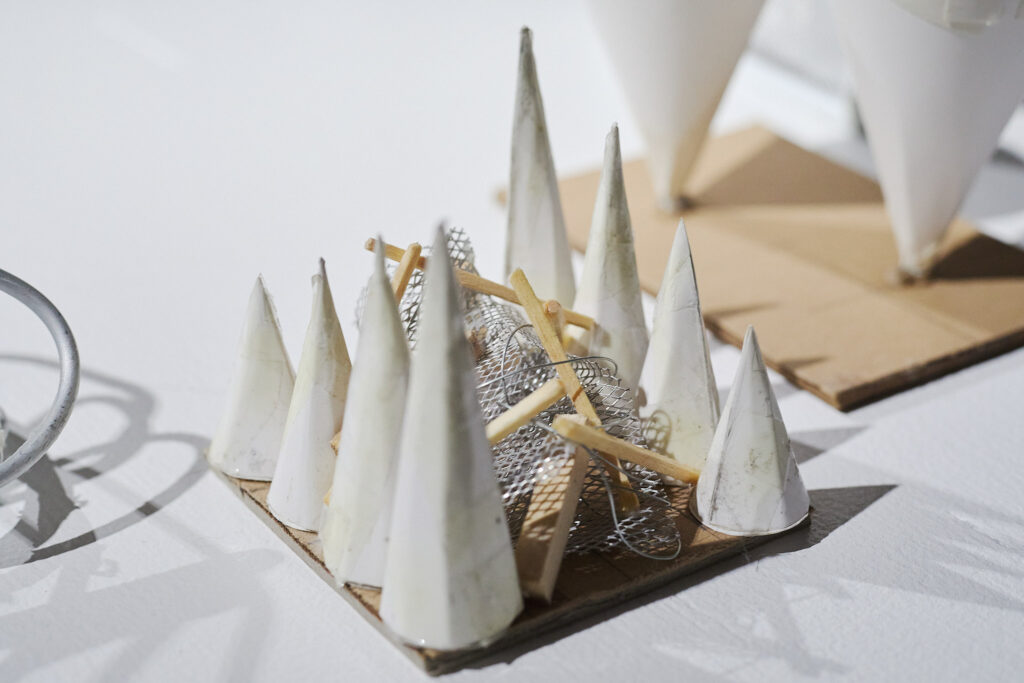
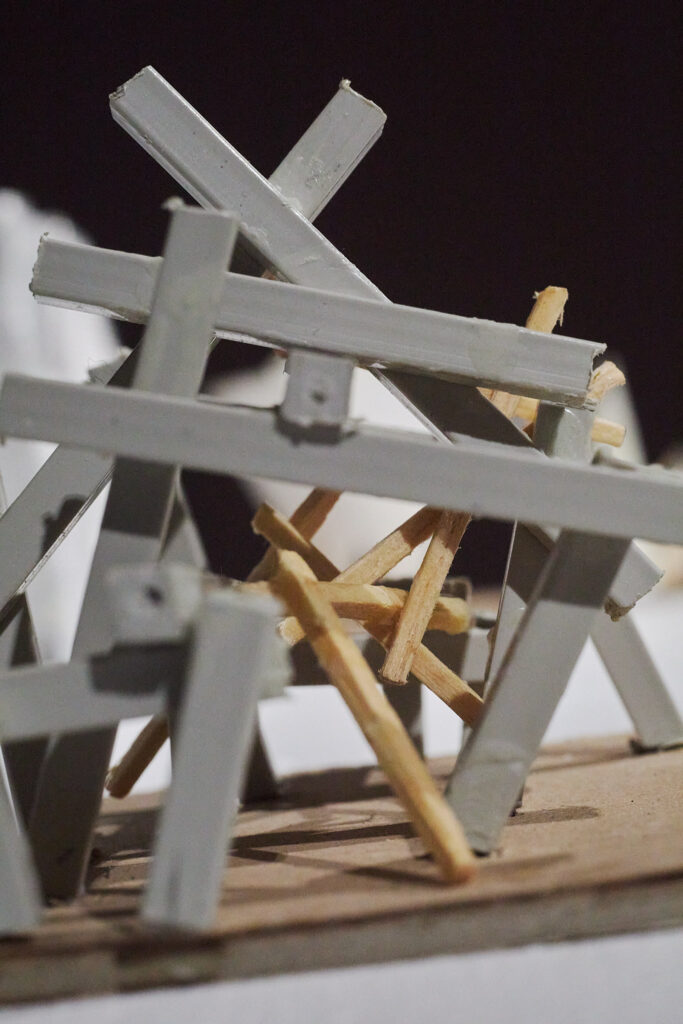
The materials of the sound instruments are symbols of the human body, expressing the brain’s plastic experience of cochlear implantation through the modification of found objects. This series reflects my own experience of how concepts and signs linking objects and sounds have been connected and served, expressed through the use of everyday objects.
The materials of the sound instruments are symbols of the human body, expressing the brain’s plastic experience of cochlear implantation through the modification of found objects. This series reflects my own experience of how concepts and signs linking objects and sounds have been connected and severed, expressed through the use of everyday objects. Just as Mono-ha emphasized the existence of materials and matter themselves, and Gutai explored direct confrontation with material, this work re-examines the relationship between object and sound (as with the bone conduction speakers, viewers touch, strike, and pluck).
The colors applied to the bodies of the instruments suggest mechanical materials and serve as visualizations of sonic fragments and memory. The sounds the instruments generate avoid harmony, requiring participants to focus on subtle sounds and to accept the cyborg-like dissonance produced by the piezo pickups. This physical constraint may yield unforeseen insights into the nature of sound and silence. The piezo pickup is a technique also favored by John Cage; its principle of capturing and amplifying the faintest vibrations functions as a device that re-examines the very meaning of hearing.
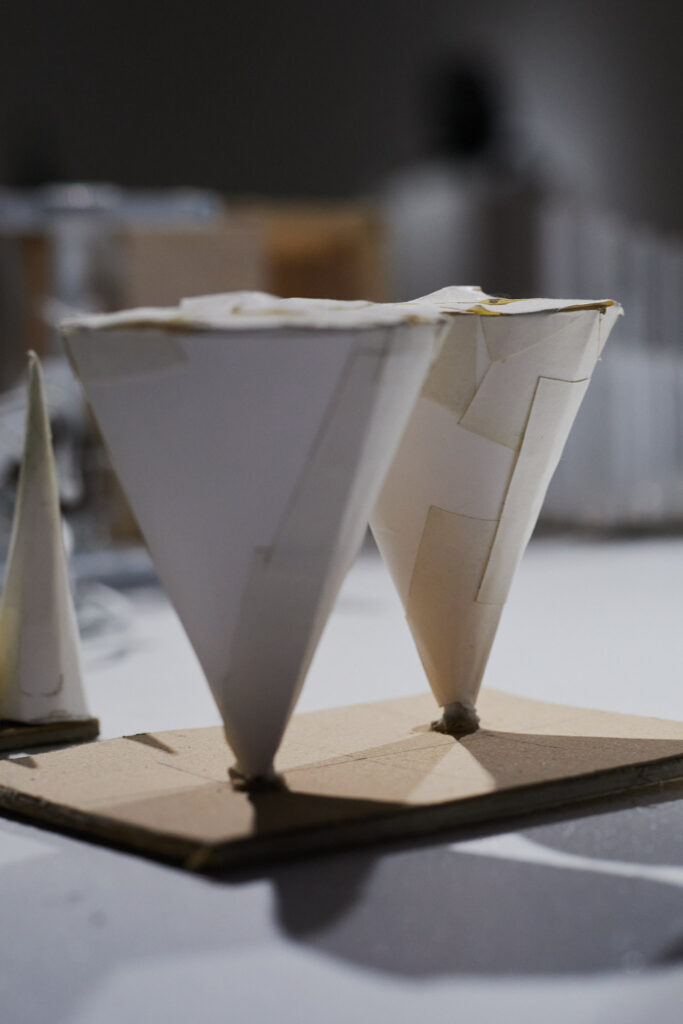
The sculpture-instruments consist of six pieces—a wooden daruma, a pot, a crab, a vase, a sasara (bamboo whisk), and a music box—with a base of black coloring that symbolizes traditional notions of void and interval (ma), in the same way that the Cyborg Butterfly series inverted tonal values to suggest the silent world. These are combined with carbon fiber tubes and carbon fiber plates, intended to evoke rational technology and civilization. This is a complementary relationship: unified in the same black tones, yet never fully merging.
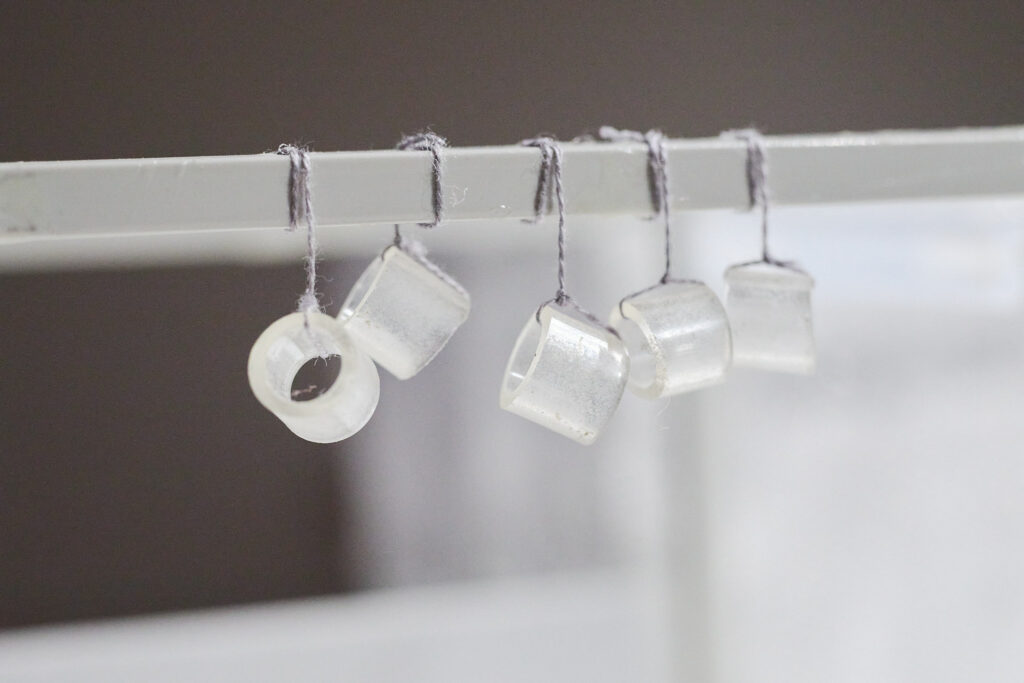
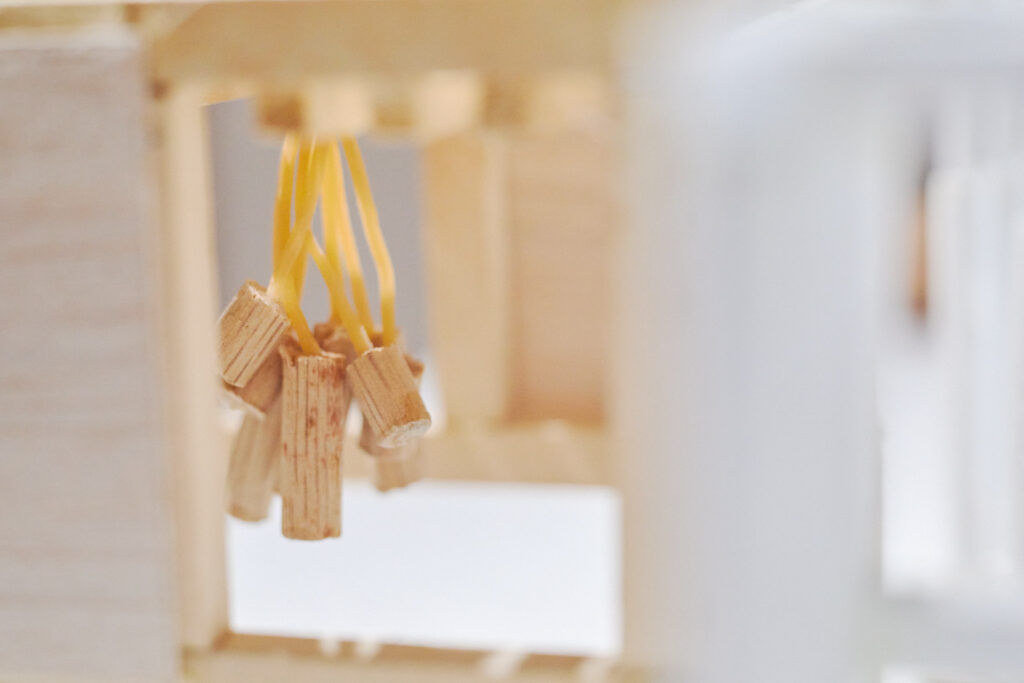
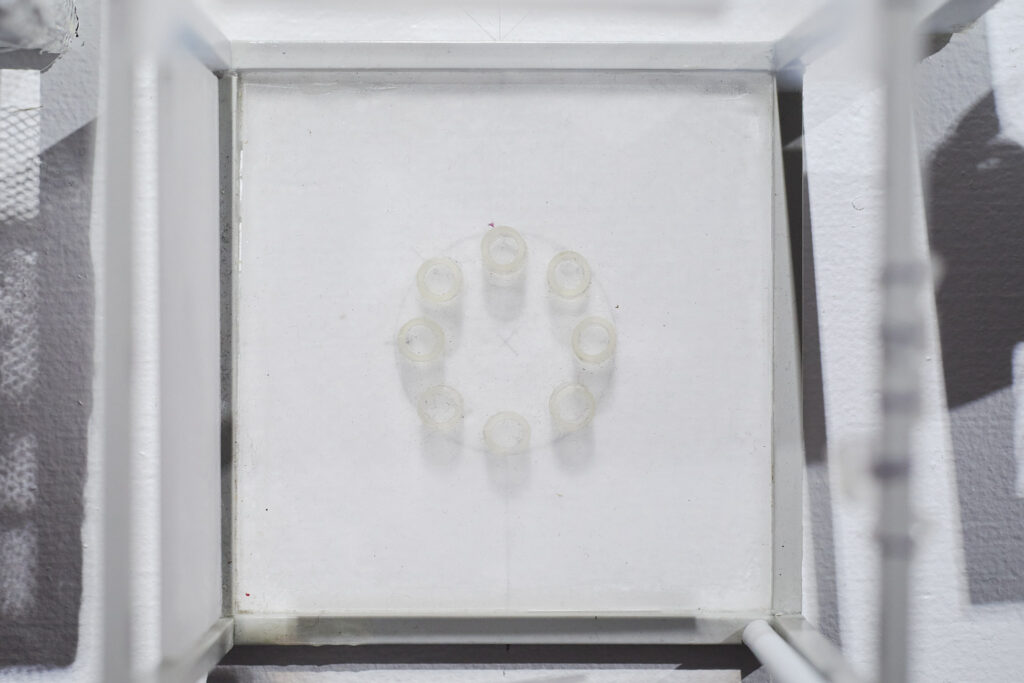
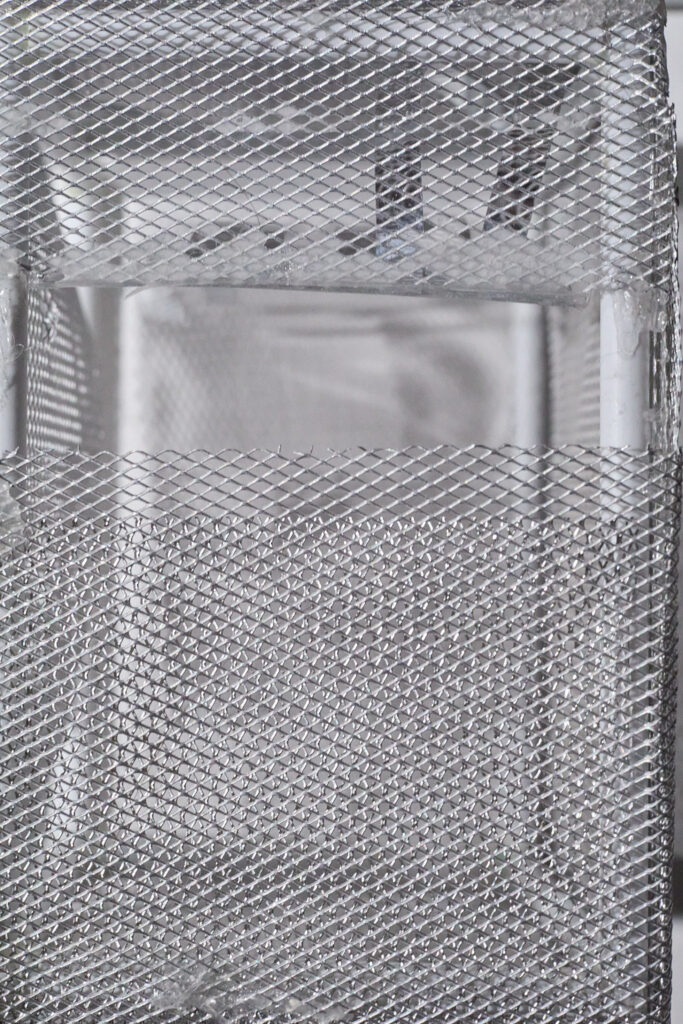
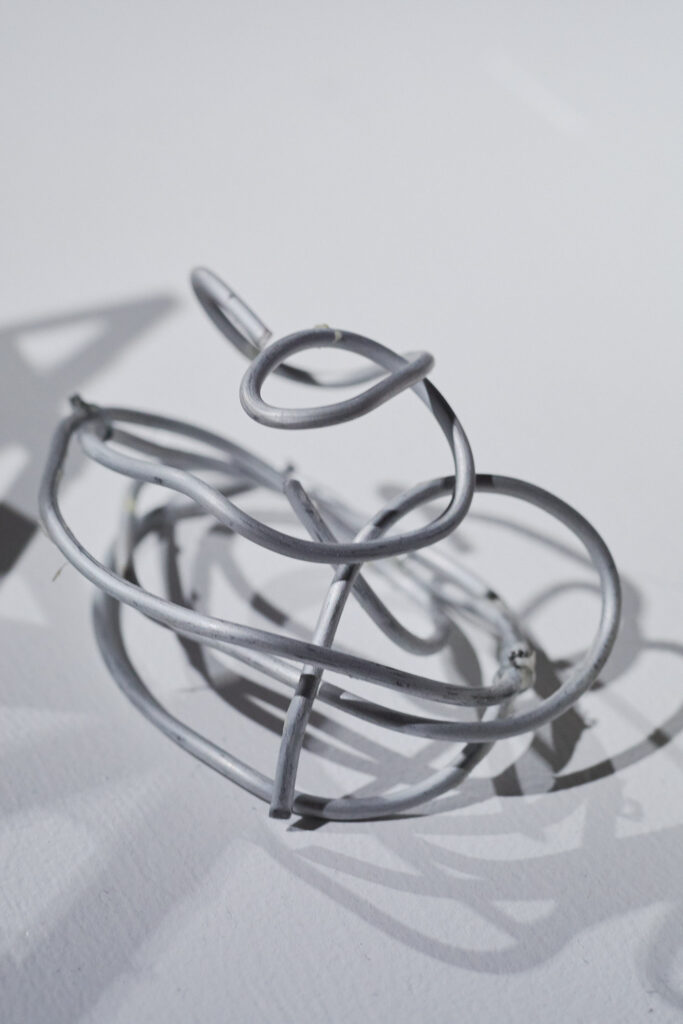
The way materials appear to float slightly, maintaining unbalanced balance, and the way wire is bound and entangled around them questions the instability of the body under technology. Three of the six pieces contain piezo pickups and small amplifiers hidden within the pedestals, creating a mechanism that amplifies faint sounds. Wire elements suggesting the cochlear implant are attached to the bodies, but there is also a wire attached to the pedestal that can be removed. This is a metaphor for the fact that one of the twelve tones generated by my cochlear implant strongly stimulates a nerve running near the eye, so I keep it nearly switched off.
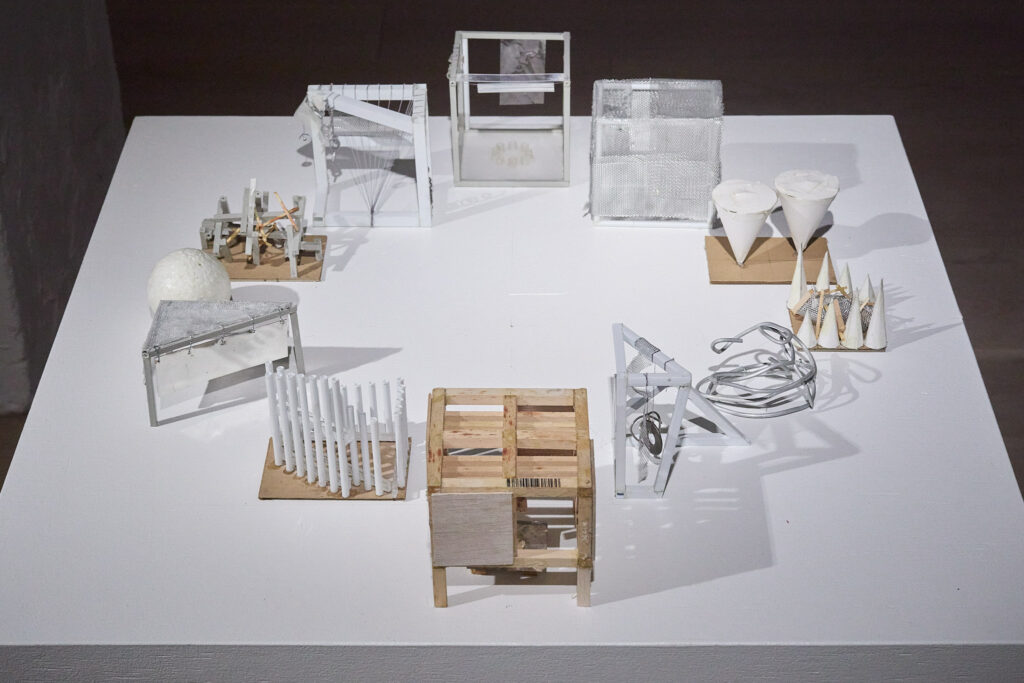
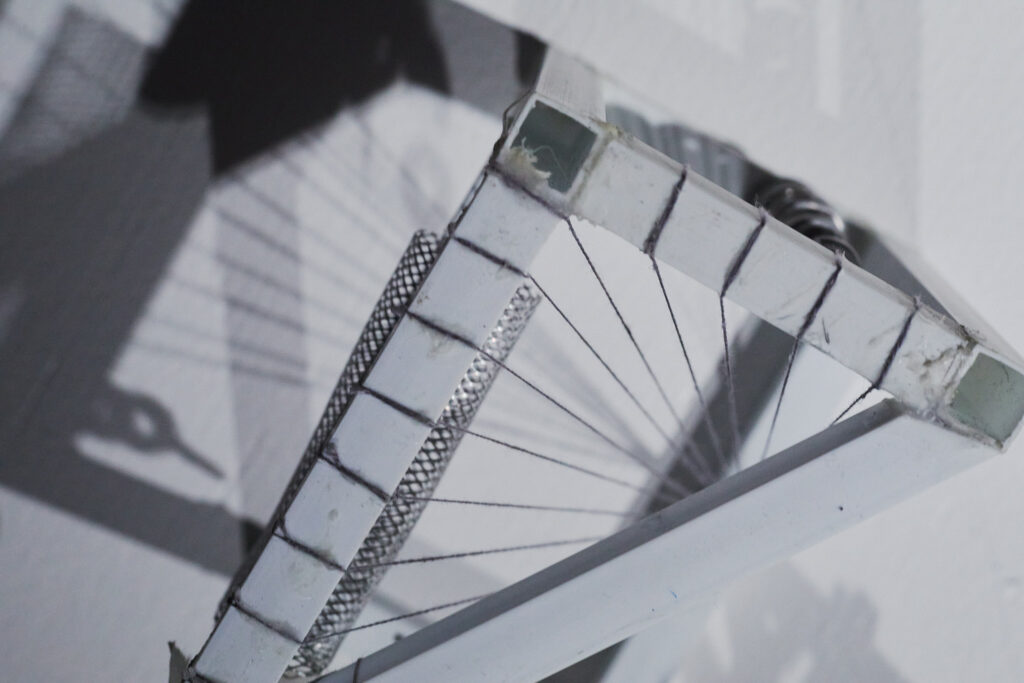
The wall instrument spatializes the relationship between digital order and analog chaos, as well as the process of transformation. As wire reaches from the wall to the sculpture pedestal, viewers experience the process by which a signal travels through nerves to arrive at the brain. This is an experience of the boundary between the body and the digital. The instrument is composed of lines made from various types of wire; some are connected to piezo pickups, while others are not, allowing viewers to feel the difference between the presence and absence of sound. The wires that produce sound vary in length and are layered, so their frequencies shift subtly. The wall to which the wires are attached is understood as a silent world—white as the inversion of black. Reducing the elements to simple wire alone serves to focus on the tactile conversion of perception, drawing on the concept of ma (interval).
音と沈黙の間で -知覚の閾値をめぐる探究-
全体のコンセプト
私は人工内耳を通して、音のある世界と、無音世界の間に生きている。そして、その知覚の間(閾値)を、絵画・彫刻・インスタレーションという異なる媒体で探究してきた。これは、失われた音を取り戻す回復の物語ではない。むしろ二つの異なる知覚の世界が、同じ場所に並んで存在すること、その経験を鑑賞者の身体に届けようとする試みである。
Threshold(閾値)シリーズ
Threshold(閾値)シリーズは、聴空間と視空間の境界線を模索する参加型インスタレーションである。鑑賞者の内省的な対話や⾳の知覚を呼び起こす場として、個⼈の内⾯に焦点を当て、新たな知覚の可能性と内省を促す空間を構成している。
本空間は、コミュニケーションのインタラクティブな体験を提供し、アーティストと鑑賞者、そして鑑賞者同⼠が⽂化・⾝体の制約を横断しながら、新たな感覚の可能性を探求する実験的環境を作り出すことを⽬的としている。⾳とは本来曖昧なものであり、我々がそれに意味を付与することによって認識可能な現象として構築してきたものにすぎない。この空間に参加することは、「⾳と沈黙とは何か」という根本的な問いを想起させる。
空間に⾜を踏み⼊れると、まず⽬に⼊るのは⽇⽤品を変容させた彫刻楽器と、壁⾯を⾛る細いワイヤーの線群である。鑑賞者は「⾒るだけ」ではなく、実際に楽器彫刻や壁楽器に触れ、⾳を奏でる。静かな空間の中で⾃らの⼿で弦を弾き、⽊を叩き、微かな振動を指先に感じる。ある楽器はピエゾによって僅かな⾳が増幅される。この増幅の仕組みは補聴器と同じ原理であり、⼈⼯内⽿を装⽤して聴く最初の⾳のように聞こえることの違和感そのものを体感させる。別の楽器は何も増幅されず、⼩さな⾳しか⽣まれない。聞こえることと聞こえないことの間の落差や揺らぎが、私の知覚世界を鑑賞者⾃⾝の⾝体に重ね合わせるだろう。⼆⼈以上の鑑賞者が同時に奏でると、互いの⾳が空間の中で混ざり合い、意図せぬ対話が⽣まれる。これは参与を前提としており、鑑賞者が参加することで作品の空間が完成する。本インスタレーションは、1階のサイボーグバタフライシリーズをより深く理解するための空間としても位置づけている。
彫刻楽器
⾳響楽器の素材は⼈間の⾝体の象徴であり、⼈⼯内⽿の装⽤による脳の可塑的体験を既製品の加⼯を通じて表現している。このシリーズには、⽇常品のオブジェを使うことにより、私自身の物と⾳の概念や記号が結びついたり切り離されたりしてきた体験が反映されている。もの派が素材や物質そのものの存在を重視し、また具体が物質との直接的な対峙を探究したように、本作は物と⾳の関係性を問い直している(⾻伝導スピーカーと同様に、鑑賞者が触れ、叩き、弾く)。
ワイヤーは⼈⼯内⽿のインプラントの視覚的引⽤であり、物体を覆うことでコミュニケーションの境界(壁)を暗⽰する。本体に塗られる⾊彩は、機械的な素材の暗⽰、また⾳の断⽚や記憶の視覚化である。楽器が⽣成する⾳は調和を回避し、鑑賞者に微細な⾳への集中やピエゾによるサイボーグ的な不協和⾳の受容を要求する。この物理的制約が、⾳と沈黙の在り⽅における未知の洞察をもたらすだろう。ピエゾはジョン・ケージも好んで⽤いた技法であり、僅かな振動を拾い上げて増幅するその原理は、聞こえることの意味そのものを問い直す装置として機能する。
楽器彫刻は、⽊製のダルマ、壺、カニ、花瓶、ささら、オルゴールの6点で構成されており、サイボーグバタフライを沈黙の世界を暗⽰するために階調を反転させたのと同じように伝統的な無や間の象徴とした⿊⾊の彩⾊をベースとしている。そしてこれらを、合理的なテクノロジーや⽂明性を意図したカーボン繊維チューブやカーボンファイバープレートと組み合わせている。これは補完関係であり、同じ⿊系で統⼀されながらも完全には混ざり合わない。
また素材がわずかに浮かんでいるように⾒せ、アンバランスなバランス関係性を持ったり、ワイヤーで縛り絡ませたりしているのは、テクノロジーによる⾝体の不安定さを問いている。うち3 点にはピエゾと⼩型アンプを台座内に隠し、僅かな⾳を増幅させる仕掛けが施されている。⼈⼯内⽿のインプラントを暗⽰したワイヤー系が本体に取り付けられているが、台座に取り付けられており取り外しが可能であるワイヤーもある。これは、私の⼈⼯内⽿が⽣成する12⾳のうち1つについて、眼球の側を通っている神経を強く刺激してしまうため、ほぼオフに近い状態にしていることの暗喩である。
壁楽器は、デジタルの秩序とアナログのカオスの関係、そして変容の過程を空間化したものである。ワイヤーが壁から彫刻の台座へと伸びることで、観客は、信号が神経を通って脳に達する過程を体験する。これは、身体とデジタルの境界の体験である。壁楽器は様々なワイヤー系による線で構成され、ピエゾに接続するが、接続しないワイヤーもあり、⾳のある/なしの差を体感させる。⾳が響く⽅は、それぞれのワイヤーの⻑さも変化させたり重ねたりするため、音が響く方では⾳の周波数もわずかに変化するだろう。ワイヤー系を取り付ける壁は、⿊が反転した⽩という沈黙世界として捉えている。そしてシンプルなワイヤーのみに絞ることは、「間」という概念から触覚による知覚変換に集中させるためである。
動画:楽器型彫刻「Threshold 1-6」の演奏例(来場者による実演)
Photo by Masataka Kougo
撮影:向後真孝
Directed by Soh Ideuchi
編集者:井出内創